
Feral Globalista: Nath Tavares From Corporate Burn Out To Debut Album
A three-language debut about burnout, ambition, and getting honest about what you actually want.
She recorded her first album at fifteen that was never released, then spent the next decade and a half doing everything else: a communications degree, a minor in consumer behaviour, stints in consulting, marketing, and tech product management, all in the name of picking something "a little bit more technical" and safer than making art. It took a couple of months without a consulting project, one sleepless night of soul-searching, and 12 days of writing to bring her back. to bring her back. The result is a debut album that moves between English, Spanish, and Portuguese. A record about corporate burnout, the temptation to blame everyone but yourself, and what it costs to finally trust the thing you were avoiding. We spoke about the album, her family's reaction to her return to music, and what she'd tell the version of herself still sitting at a desk.


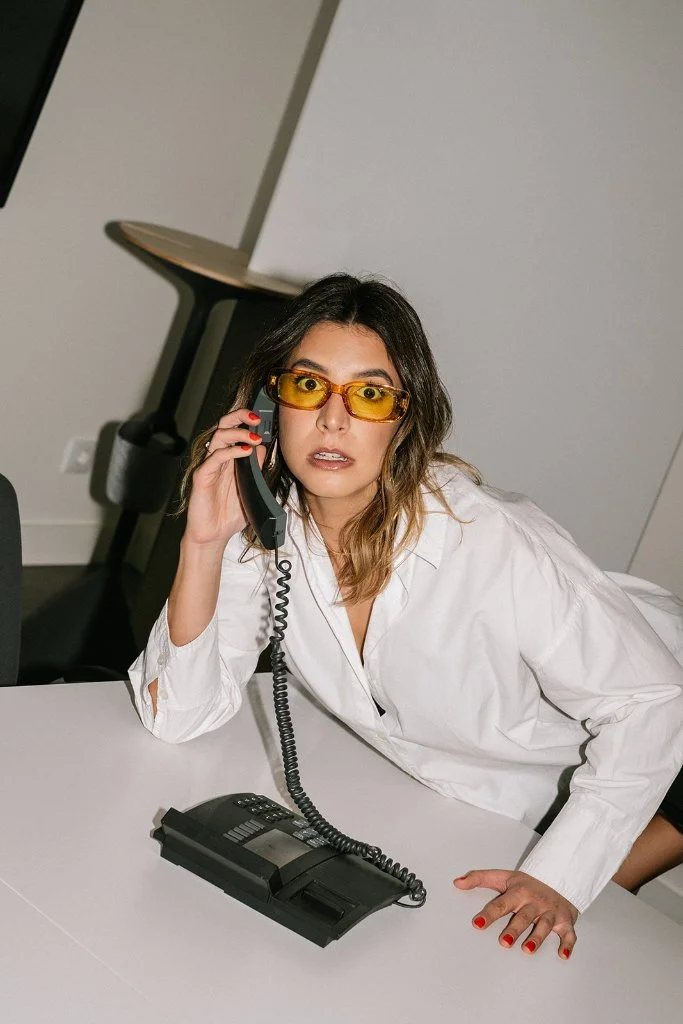
TFG: The album speaks a lot on surviving corporate jobs, knowing you're meant for more. How has your own life shaped the topic of this album?
Well, so it's very autobiographical in that sense because you know I studied communication, minored in consumer behavior, also did classes on video game design and management, all because originally I wanted to be an artist, but my family and people around me were like, you know, it's not a very safe career. So how about you pick something that's a little bit more technical?
So I studied video game design for the technical part, and then I went on to roles in consulting and marketing and technology product management, which of course I learned a lot about these roles. But at the same time, it was like the more I advanced in my career, the more I felt like I went away from what felt true to me... I believe also with millennials we were told like you find the perfect job and you make the world better, and the reality is very different.
But it got to a point where I felt like I had tried a lot of different things and nothing was working. I had five jobs trying to figure that out, and it was just like, is this what success was supposed to be like? Because if that's the case, I did not sign up for this. So it's funny because the album came out of this frustration, right? I had a consulting role at a management consulting firm, you know the typical all nighter kind of work, and all of a sudden there were no more projects, right? And I spent a couple months without a project, and I was freaking out, obviously... So, in one of those sleepless nights of thinking about my life and where I wanted it to go, I was like, you know what? Let's take this time that I have, that I have no projects, and let's create a project of my own because I'm crazy like that.
So I was like, well, I recorded an album when I was 15, so let's see…it was very much testing the hypothesis of like, can I do this again? It was really a matter of 12 days of hashing out songs, and they were very much aligned with what was happening... So the album was very much a reflection on this kind of message that we have of, if we climb the corporate ladder, if we check all these boxes, we'll be successful. But is that really what we want? Aren't there other paths to follow?
TGF: I think one of my favorite lines in the album was "sometimes she wonders if she's really in an office or a hospice." Immediately when I heard that, I was like, that's just fantastic. Do you have any words of wisdom for someone who's also stuck in that kind of experience?
Yeah, no, that's a good question. My last song, key takeaways, talks very much about what I would like people to take away from this album a satirical approach, you could say, to consulting, right? Because in consulting it's like, okay, what are the three takeaways. And the three takeaways I would say are: choose the path that works best for you. That doesn't necessarily mean that it works best for other people, right? This is not school anymore — you don't get a grade for what you're doing. So make your own rules, break whatever rules make sense for you to be happy at the end of the day. So that's the first one. The second one is you're the one in control, right? I feel like a lot of times we get stuck in this feeling of like, oh, the capitalistic system, and I have no control over what I do and that's not true. Of course it would be nice to have a little bit more control. But you control your own life, right? I'm a very much glass half full type of person, and I feel like that helps me a lot in seeing, okay, I can turn this around. And the third is, it's super cheesy, but you got to be your own biggest fan, right? Because nobody's gonna be there for you. I think it's important for you to encourage yourself every day. Like I see this a lot on social media as an artist nowadays, content management is something that you have to do, and I post fairly often, and it can be pretty exhausting, especially if it's not really what I signed up to do.
But not every post will have all the likes. So it's like, maybe this one didn't work out, but we got tomorrow, right? And I can do this. And I would add a bonus, which is try to see things in a more light-hearted way, right? Nobody's gonna die because you've decided to do one thing over another. Something that I really wanted to incorporate in my album was a sense of humour, because sometimes we take ourselves too seriously and it's not necessary. We are one of…well now a billion people, right? So take it easy, breathe, do whatever feels right to you, and take it lightly.
TFG: I think a song I really related to and a lot of people probably relate too, it is All On Me, that feeling of wanting to blame someone else but knowing logically everything's kind of on you. I'd love for you to talk more about writing that song, and the experience that informed it.
Yeah, definitely. So this one was a pretty cathartic song for me because I very much said the thing that I didn't want to say out loud, right? Because I always had this feeling like I was meant for something more, whatever that is. And it was always like, well, it's because my parents said that I should study something more technical. It's because my school didn't encourage the arts. There was always a reason outside of me.
But at the end of the day, if I see it in a different light my parents have always supported me in everything that I did. They gave me the best they could possibly give me with the tools that they had. The schools that I was in, the teachers, they did the best. I actually did quite a lot of the arts within my school, right? But I decided to follow a different path at the end of the day. I didn't allow myself to go for the thing that I wanted to go for. So it was this realization of — maybe I should look in the mirror instead, right? I have this lyric: I could raise my face to the sky, scream at everybody till I'm red, but it's not worth taking a fight when I should look in the mirror instead. I remember recording the song and finishing it and bursting into tears because I was like, yeah, this is what's happening, really. So for me, it's a very special song because of that.


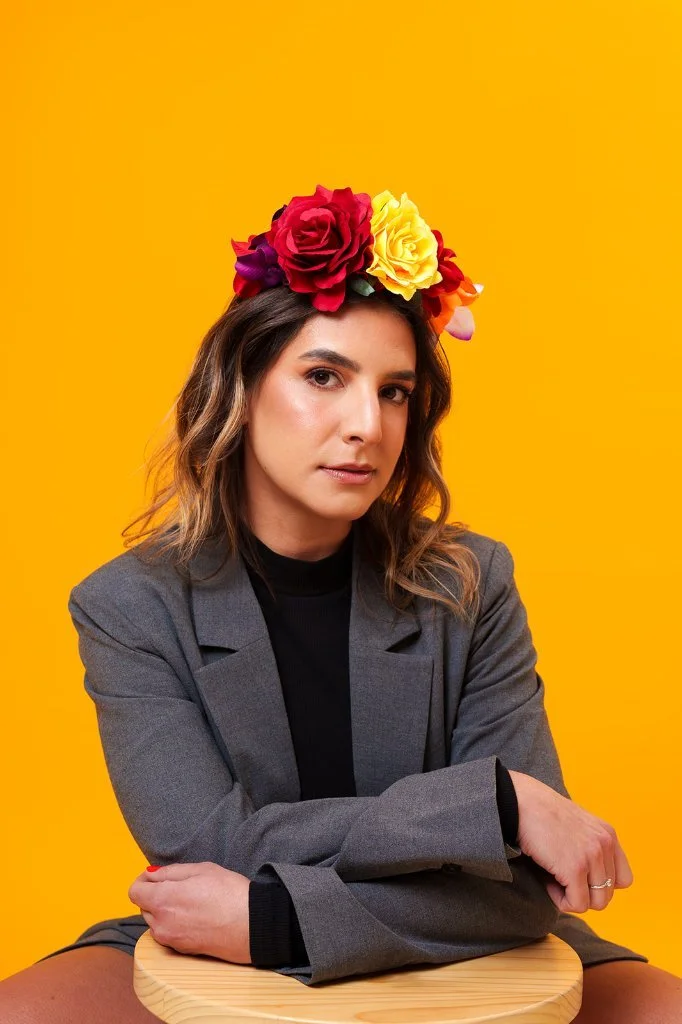
TFG: I'd love to focus in on how you really made that transition from office work to music, your family's reaction, the people around you's reaction. We live in this very capitalist society, so it's a big leap to take. How did you handle that? How did you process that risk?
So this is a really fun question because one thing is what happened in the album and another thing is what happened in the reality, and these two things can coexist, right? As an artist nowadays it's very hard to live on your art, especially if you're an emerging artist the upfront investment is pretty big, and the upfront return is negligible. So I still have a full time job, but it's a job that allows me to have this kind of "quote unquote" double life, because the job I had before did not allow that to happen. It's kind of a funny story too, because there was a restructuring at that management consulting firm, and I was let go. So it was kind of this blessing in disguise, because it was not working for me, and I actually had planned on resigning, but they beat me to it, which I guess is a good thing. When I shared with my family about the album, there was this mixture of they were excited for me, but most of all they were nervous for me, because when I shared about the album, I did not have a job.
So they're like, okay, this is great, but are you sure this is the path that you want to take, right? They were happy that I was kind of returning to myself, but it was also like they know the financial reality of the situation. But either way, my parents share all my posts. They listen to my songs, all that. So it's very supportive.
With my friends, it was funny, because actually the song Might As Well was very much inspired by the performances I've had when people find out that I can sing, it's like, wait, what? What are you doing, singing at a desk? So my friends are pretty excited about it too, of course with the same kind of "are you sure?" message. But I think overall the reaction was really positive. So it was very nice to see okay, this is a gift that I have for the world. I don't like to say it like that because it sounds very you know but it's this gift that I have to the world, and people are openly receiving it, and that was really it was like this weight that dropped off my shoulders.
TFG: I'd love to hear more about how culture plays a role in this album. The fusion of Spanish and English really comes through in your music. What does blending the two languages let you express that one alone couldn't? And you're Brazilian, but you choose to sing in Spanish, why was that decision made?
I'm originally from Brazil, and I lived in Mexico, in China, the U.S., France, and Portugal. Actually, I left Brazil when I was nine years old. So I live most of my life in Mexico. For me, Spanish is almost second, if not first language.
What I realized as I was writing the album is that I couldn't just stick to one language, because it didn't express what I wanted to express, and it didn't express the message for the audience that I wanted to express. It's also different parts of me in a sense the album has three languages, English, Spanish, and Portuguese, and I realize that my Portuguese voice was much more defensive, you could say. I think it's because that little voice always stayed there, since I was young, of what were the expectations of me.
I left Brazil very young, so whenever I would go back, it would be like, oh, you speak kind of funny, you have a weird accent. I wasn't really able to integrate with the language. Now I'm very fortunate because I found incredible people from Brazil here in Lisbon, and now I'm older, so I know where I stand some of my closest friends are Brazilians, so I've made peace with that.
But the Spanish one is much more like it's when I'm getting closer to what I want. So, for example, "Clutter" is partly in English, partly in Spanish — Spanglish — and I made it very much on purpose, because I felt like it was the perfect way of portraying this: I have this identity, but I also have this identity, and I can't have both worlds in a sense, so it becomes cluttered, like the song itself. And "Y Mil Más" my partner, he's Argentinian, which is also kind of funny because I'm Brazilian, he's Argentinian, we don't get along when it comes to football but it was very much, I wanted to write a song in Spanish for him, because it didn't make sense for me to write it in English. It was a really nice way of expressing this…what was home, what is home for me. And English is much more of a direct language, so I felt like the languages I chose for each of the songs were very much this is the message that I want to get across. And it also goes to the genres I wanted to incorporate different genres into the album to showcase this global life that I had. I couldn't think of any other way to have an album. I couldn't think of having just a pop album, just a rap album, just a mariachi or salsa album.
So it was a really nice way for me to incorporate all of me into the album.
TFG: Looking back before you wrote the album, when you were just working at this consulting job, you didn't like it. What would you tell that version of yourself? What advice would you give to someone who wants that creative output?
So it's a two sided kind of advice. On one hand, don't do something just because everyone thinks it's cool or thinks it's success and don't drop things just because people don't think it's cool or it's success, right? Because I feel like I very much followed a path that was very sequential like, oh, if you go to a good school and get good grades, and then you go to a good job and get the promotion, then you'll be happy, you'll be successful and I realize that that's not the case. If I take the time to think about what do I want, and I follow the path that is what I want, as long as it doesn't harm anybody, then I'll get to success faster, and it doesn't matter. Because especially in the consulting world, people compare things that don't really make sense to me this person has this car, this person has this blah blah blah and for me, I just want to write cool music.
So don't do things just because people say that it's the right thing to do, and don't drop things just because people don't support it.
TFG: Anything I didn't ask that you really wanted to touch on about the album?
Yeah, I think this album it was a very cathartic experience for me. It's very much for people who are also feeling a little bit lost, who maybe followed this path that they thought was going to bring joy, and at the end of the day, did not. And to give them the encouragement to follow what they want, right? Actually, the album was initially going to be called Mismotivation, because I always told people follow your dreams, and I didn't do it myself. Then I changed it to See Attachment, because I felt like it had this little play on words being attached to the known, you could say. But it was really an incredible experience, and I can't believe it's out. I'm super happy.
Just the fact that the album is out, for me, is already success, and I'm just hoping for more. So hopefully you see me playing Lisbon at some point. I got to collaborate with amazing creative minds like my producer Nano Moreno and my photographer Amanda Teixeira. It’s thanks to artists like them who believed in me that See Attachment is what it is today
Interview edited and condensed for length and clarity. Quotes have been lightly edited only for grammar and readability.